NATURA MORTA
NATURA MORTA
[2024-2025]
digital photographs
How can we incorporate still lifes in contemporary photography?
Can we use them to address current problems?
Can they still be of lasting value in the 21st century?
NATURA MORTA
In my work, I sought to answer these questions. As static compositions, still lifes reflect small yet deeply meaningful aspects of life through different symbolic systems. Through a conscious selection of components, still lifes can not only provide a visual experience but also stimulate intellectual interaction. The grotesque aesthetic creates narratives that can capture and provoke the viewer’s attention. In this way, they are able to reflect on collective memory and social reality.
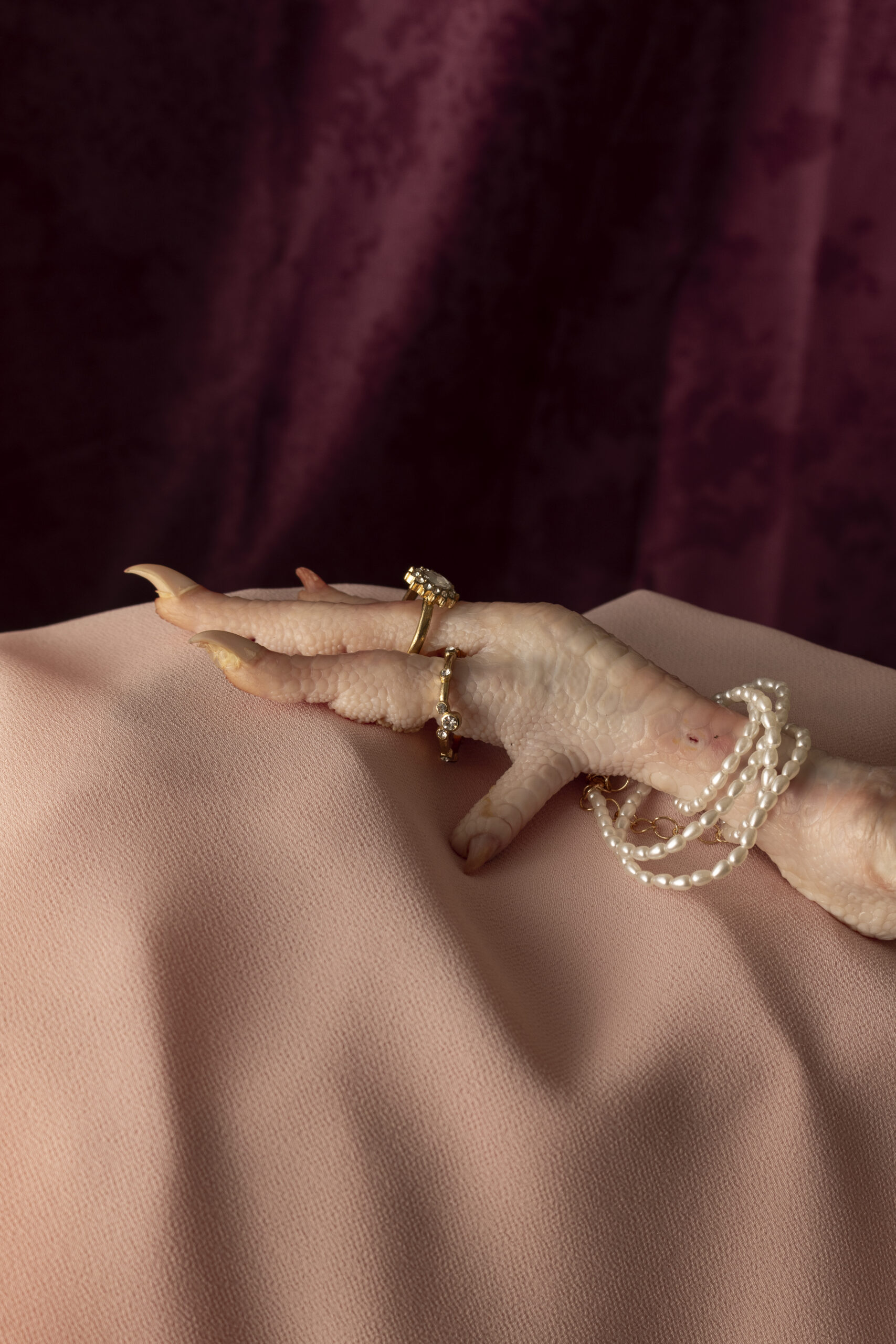
CHICKEN PAW
A chicken paw is the central element of the first photographs. In one photo, I show the chicken leg with a bracelet and rings on its “fingers”, and in the other photo I covered it with glued-on gemstones. The classical composition contrasts with the dead chicken’s paw.
In the 21st century, how do we define and interpret symbols of wealth and power in a social and societal context? Jewellery and gemstones are often status symbols. Seeing them on a dead animal reveal that the value and meaning we assign to a certain object are strictly social conventions. They do not reflect real value. The photograph highlights the absurdity of status symbols and social hierarchies.
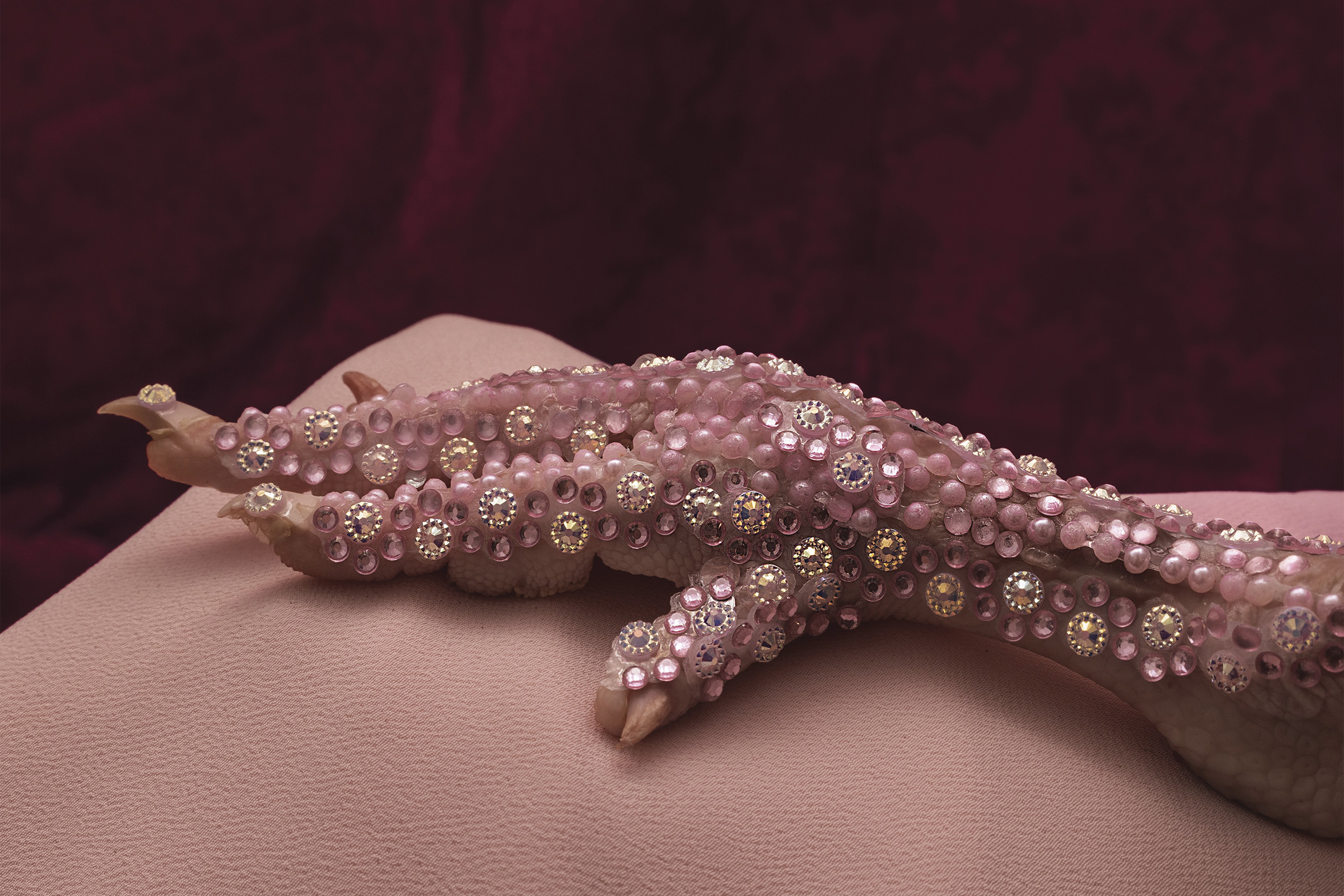
Anthropomorphism is when we assign certain human qualities, habits and meanings to animals, objects or things. It is an important tool of the image. It helps us recognise that we tend to view and interpret the world through our own human filters, ignoring other perspectives. The notion of beauty is not only linked to aesthetics, but also to social and cultural constructs and concepts. They constantly distort and shape our lives, values and norms – like how people shape and distort their natural body in order to fit these ideas.
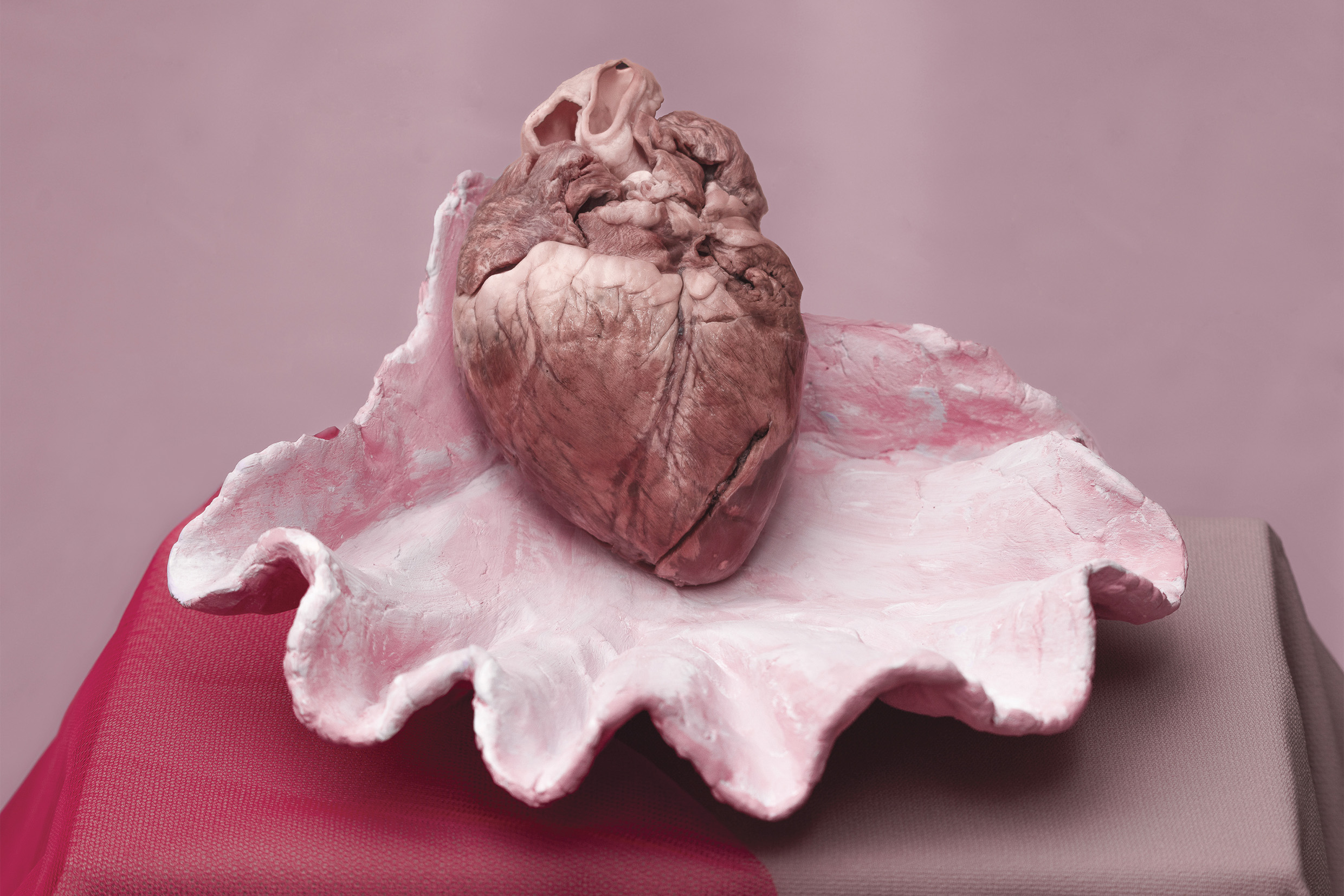
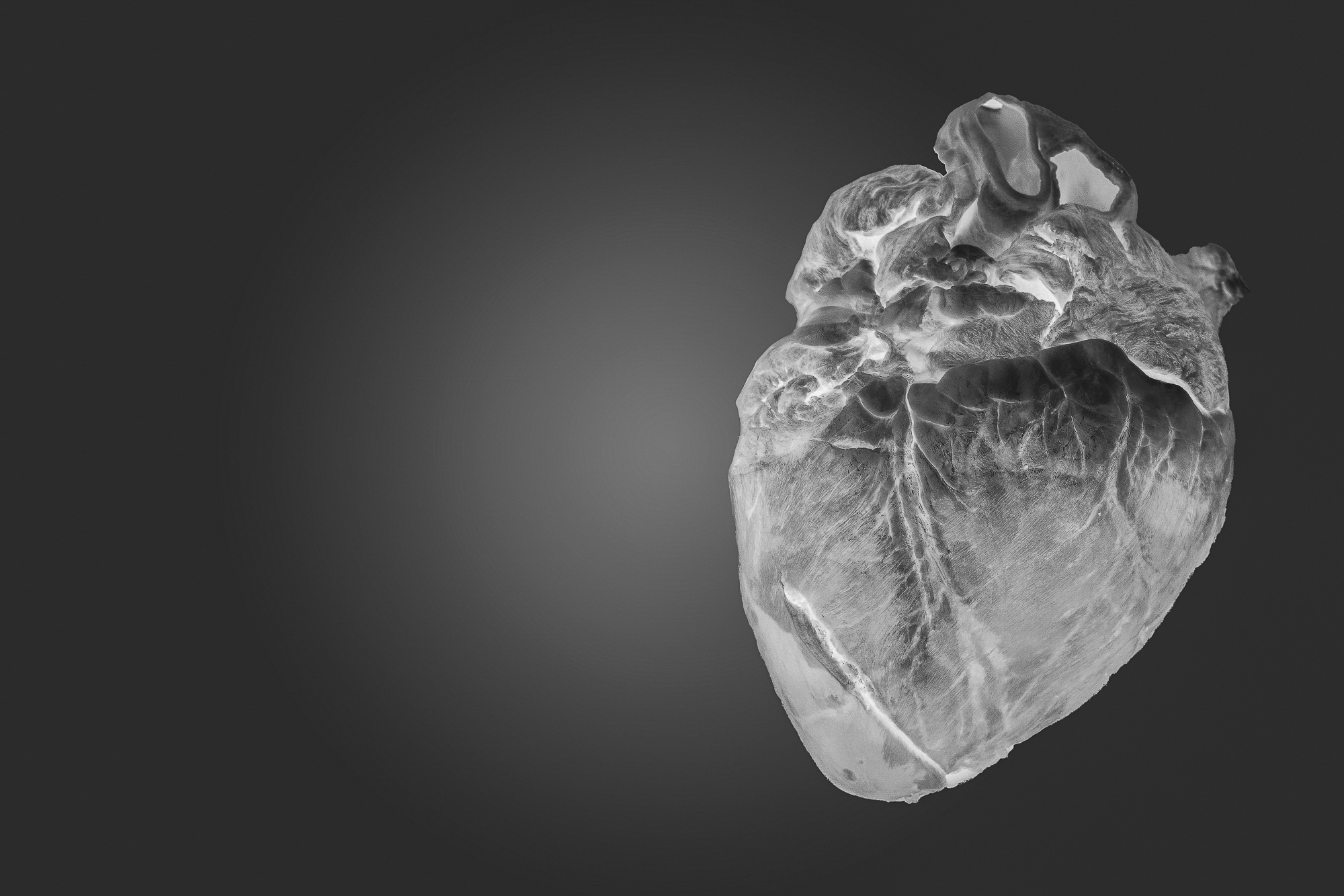
PIG HEART
In the second still life, I placed a pig’s heart inside a shell I shaped from clay, set against a pink background. The shell is a soft, refined element in the picture, while the raw appearance of the pig’s heart contrasts with it. This heart is an analogy for the pearl developing in the shell. While a pearl traditionally symbolizes purity and beauty, the pig’s heart represents lifelessness, transience, and rawness in my work. Replacing the pearl with a heart radically changes the meaning.
In this context, the heart symbolizes vulnerability and fragility, serving as both an emotional emblem and a source of life. As it is plucked from a dead body, it has a grotesque effect, a duality of meaning. The formulation as still life reinforces the meaning, a means of juxtaposing death and life, as in vanitas still lifes.
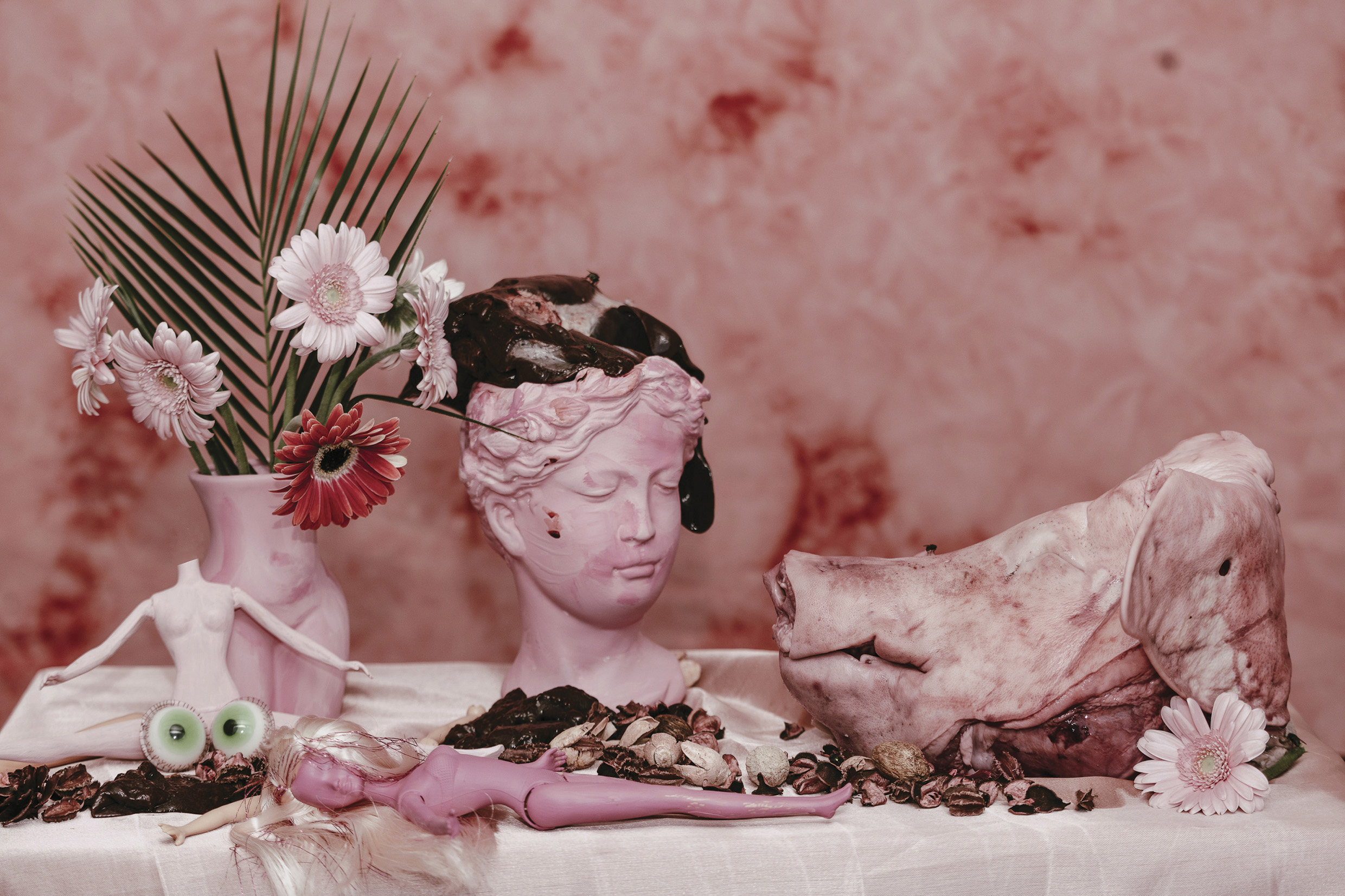
PIG HEAD
An important element of the third image is a severed pig’s head. The head and the entrails contrast sharply with the background, the pink tablecloth, the flowers and the sculptures. I took the dolls apart and painted them pink along with the female body and head sculptures. I use these as symbols of femininity, womanhood, social ideals of beauty. I filled the hollow, “empty” female head with the entrails of a pig, reflecting on the social constructions of female identity and roles, the valorisation of external appearance over internal values.
This contrast of organs and plastic reinforces this dissonance. Plastic objects (bodies, heads, legs), which can survive for millions of years, i.e. cannot perish, are juxtaposed with the decomposing remains of the dead animal, creating a grotesque effect, reflecting the transience and perishability of the body. Plastic, as an artificial material, suggests durability while being separated from life, while flesh, as a decomposing material, is associated with life and mortality. Joining these two materials creates a contrast that reflects the gap, the duality, between the artificial beauty and the real, ephemeral body. These also symbolize mental or emotional emptiness, which is further emphasized by the pig’s head as a representation of life’s brutal reality.
With pink flowers in a vase, a pink tablecloth, and a matching background, the image plays with the formal solutions of classic still lifes while provocatively reflecting on social norms and modern life.
TITLE
When choosing the title, I tried to keep it short but expressive. The term ‘natura morta’ means ‘still life’ in Italian, but in a literal translation it can be understood as ‘dead nature’. I find it interesting that while the majority of germanic languages associate the concept of life with still life. However, the majority of latin and slavic languages associate the meaning of death with it. I feel that the term “dead nature” accurately reflects the essence of my work.
CONCLUSION
During the creation of these photographs, my vision gradually evolved. While many people may consider the genre of still life to be monotonous or boring, I have discovered its diversity. The process has allowed me to explore the complexities and interpretations. The genre has opened up a new perspective for me. Still lifes in contemporary art are not simply visual creations; they reinterpret the past and raise questions in the present, giving relevance and value to the genre. They can live on as a means of expression where classical compositions meet themes that are relevant to the present.
With the values and messages of the genre in mind, contemporary adaptations are able to raise provocative questions.
READ THE SUPPORTING RESEARCH IN ENG/HU BELOW: