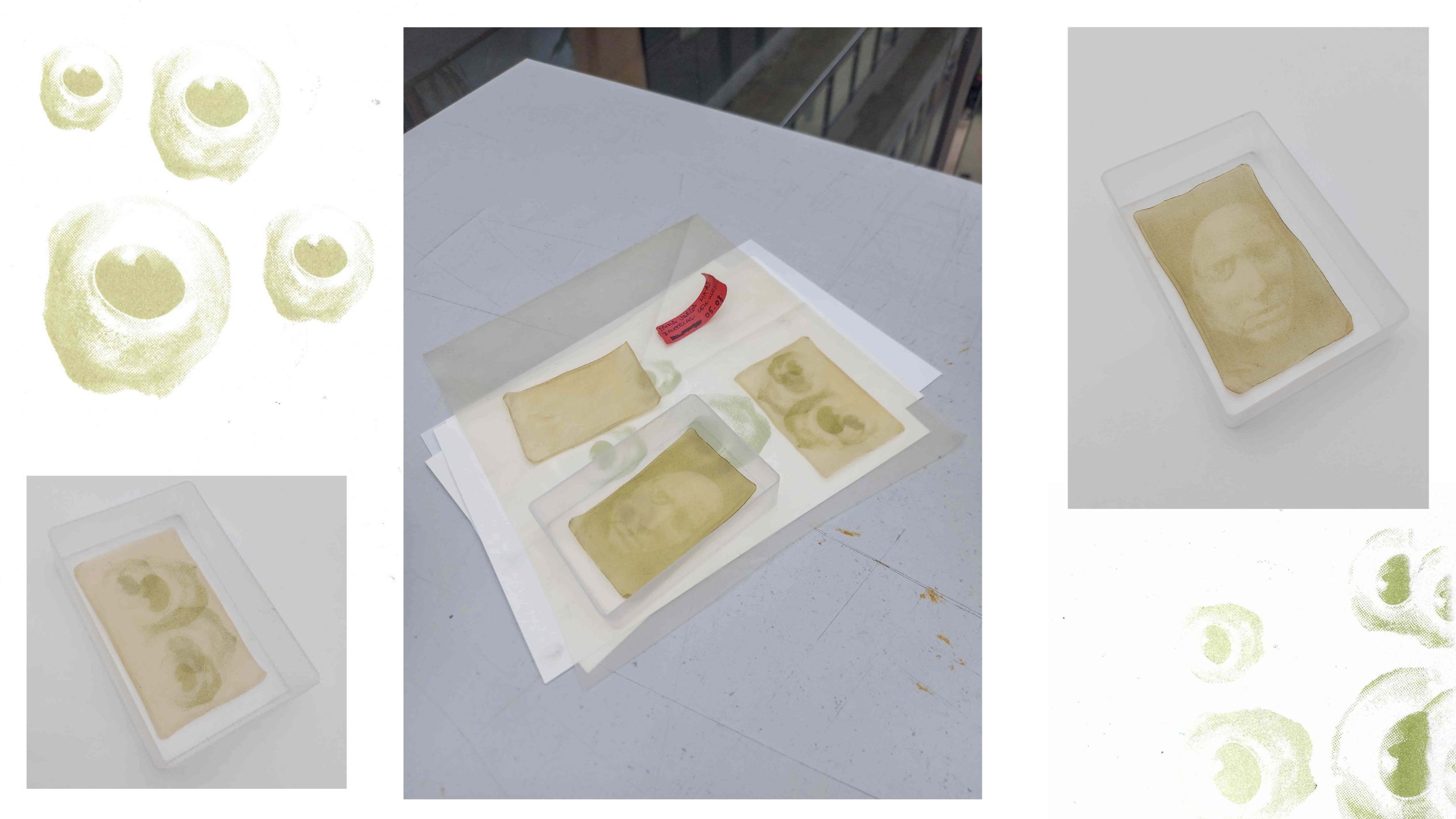
What does it mean for a photograph to be made from living materials? Can a print still claim permanence when it is grown, not manufactured? What if the print is not meant to survive? What happens to photography when the substrate, pigment, and surface are all shaped by biological transformation?
Growing my own bacterial cellulose and algae-derived pigments, I create the substrate and handmade paint to print my photographs. The image becomes a fragile, organic surface – responsive to time, light, and humidity – where the photograph slowly shifts, cracks, and fades. This project questions photography’s promise of permanence by treating the print as a living, decaying material, shaped by biological processes.
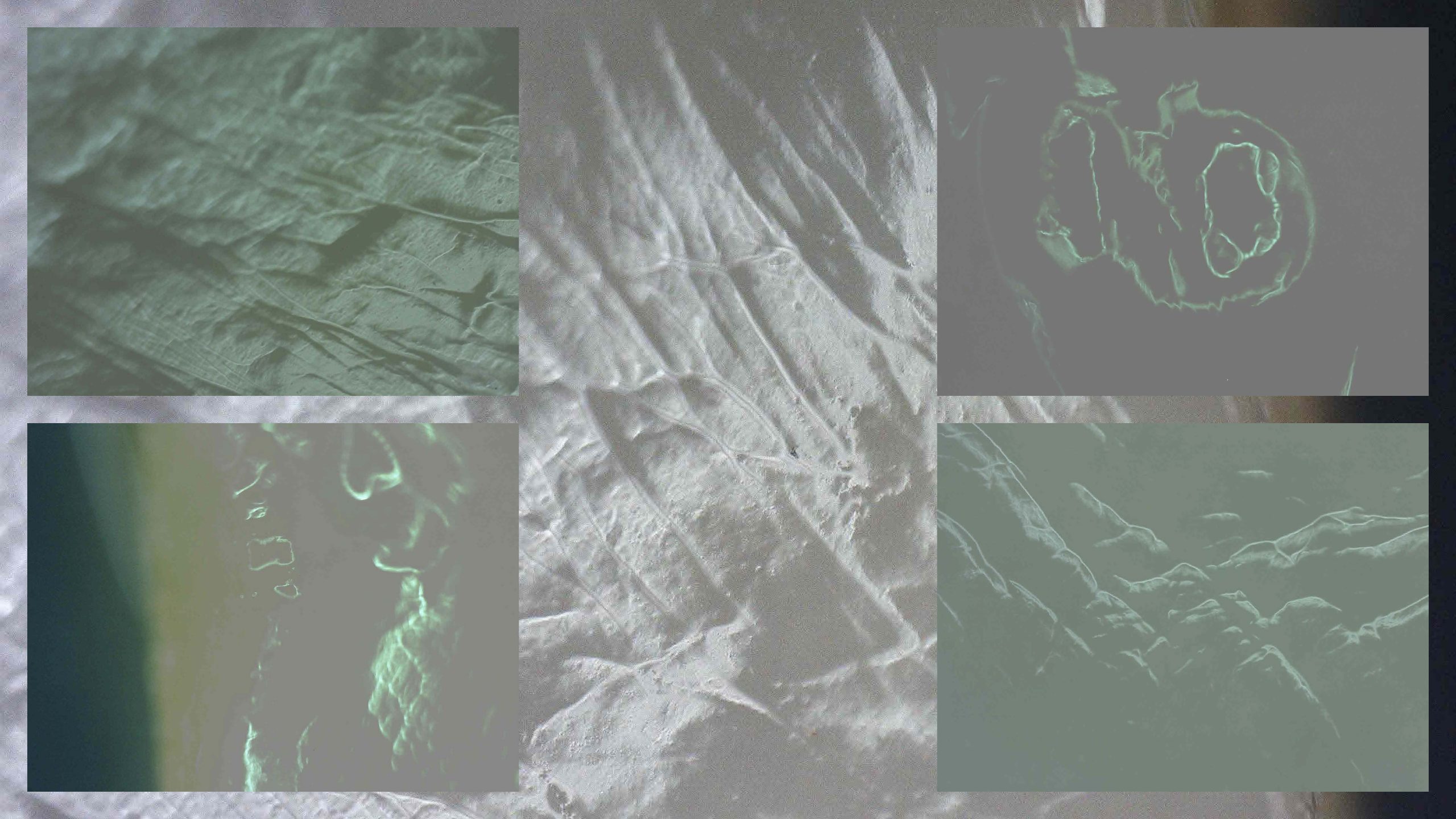
After realising that the algae-derived pigments are light sensitive and eventually disappear, I decided that I’ll introduce the cellulose to the Cellulomonas bacteria, the images below are taken with microscopes showing this process, the destroyed cellulose.